Pages

Thursday, June 2, 2011

What the heck is happening with OpenOffice?


This weekend was filled with rumors about the fate of OpenOffice. Oracle essentially abandoned OpenOffice, after The Document Foundation’s LibreOffice fork but rumor has it that IBM wants the project to continue. The big question, which is still unresolved as I write this, is, “How?”
At the moment, almost all of what I have are comments from people close to the matter who are unable to go on the record. That said, here’s my current understanding of what’s going on with OpenOffice.
First, after Oracle booted out the LibreOffice fork developers from OpenOffice, Oracle still didn’t want to invest anymore in OpenOffice. As Edward Screven, Oracle’s Chief Corporate Architect, said in April, “Given the breadth of interest in free personal productivity applications and the rapid evolution of personal computing technologies, we believe the OpenOffice.org project would be best managed by an organization focused on serving that broad constituency on a non-commercial basis. We intend to begin working immediately with community members to further the continued success of Open Office. Oracle will continue to strongly support the adoption of open standards-based document formats, such as the Open Document Format (ODF).”
If that sounds like a contradiction in terms: OpenOffice is doing so well that Oracle doesn’t want to manage-read pay for it-you’re not the only one to see it that way. As Louis Suárez-Potts’ OpenOffice’s Community Manager and former Oracle staffer, told my buddy Brian Proffitt that no one’s really sure what Oracle plans for OpenOffice, or what’s more important, what it means for the ODF.
“People like the ODF simply because of its enormously successful flexibility,” Suárez-Potts told Proffitt. OpenOffice, LibreOffice, IBM’s Symphony and Google Docs all use ODF. But, with Oracle taking a hands off approach to OpenOffice and ODF, what does that mean for the format?
Suárez-Potts saw four possible futures for OpenOffice. Neglect, which is where we’re at now, was the worst choice by far. The others were to spin OpenOffice to a new foundation with broad industry support; join it with an already existing open-source foundation with broad corporate support such as the Apache Software Foundation or The Eclipse Foundation; or to join up with the Document Foundation’s LibreOffice fork.
It now seems that IBM, which has invested millions in OpenOffice over the years, and uses it as the basis for its Symphony office suite, preferred the option of OpenOffice being spun off to The Apache Foundation. Oracle, which I’m told has contractual obligations to IBM to see that OpenOffice continued to be developed, was fine with this. Unfortunately for IBM and Oracle, my sources tell me that Apache was not so enamored of the idea and has turned it down.
I can see why Apache would want to steer clear of the deal. Apache has not been on good terms with Oracle for several months now after fighting with the company over how Oracle had been managing the Java Community Process. In addition, Apache had also had problems with IBM and Oracle over their support for the open-source Java Standard Edition (SE) OpenJDK over Apache’s open-source Java SE Project Harmony. In addition, much of OpenOffice’s GPL code isn’t compatible with the Apache Foundations’ Apache license.
The Document Foundation thinks Oracle should donate OpenOffice’s code and intellectual property (IP) to them. Italo Vignoli, a member of the Document Foundation’s steering committee, told me, that if Oracle does spin these materials off to another body, “Oracle is missing the opportunity to re-unite the OOo community governance. The Document Foundation remains open to every company and individual that wishes to participate in co-development. There has never been a better time to get involved and advance the state of the art in free-software office suites.”
But what will really happen? I don’t know.
I do know, based on all the bits and pieces I’ve been hearing that Oracle, at least, doesn’t want to give the OpenOffice to LibreOffice. IBM feels more neutral about it. In the end, I see OpenOffice going to another organization. My best guess at this point is that it will be The Eclipse Foundation. One way or the other, it appears that OpenOffice will continue on.

The mystery of Windows 8's new 'Protogon' file system

Windows enthusiast Sandro Villinger has a nice summary of some of the known and unknown Windows 8 features that various folks have discovered since internal “milestone” builds began leaking over the past couple of months.
Villinger makes a passing mention of something I hadn’t heard of in his Windows 8 Top 10:  Something named (or codenamed) “Protogon.”
From his May 31 IT World article:
“I’ve also dug up traces of some underlying file system changes that I couldn’t quite make sense of, such as an entirely new file system driver called “NT Protogon FS driver”, which looks like a kernel mode driver for some sort of (yet unknown) file system called Protogon. It’s unclear, whether this is a major new file system or just some minor subsystem.”
I asked Rafael Rivera of “WithinWindows” fame as to whether he’d heard of Protogon. He did a quick check and said that whatever Protogon is, it  seems to incorporate database-like concepts like transactions, cursors, rows and tables. He said it includes a string, which seems to indicate Protogon could replace or at least emulate NTFS (the NT file system) as needed. Rivera also wondered if Protogon might be an update of the “Jet Blue” file system/extensible storage engine adapted for the latest version of Active Directory and Exchange Server.
There were a lot of rumors early on about Windows 8, including that it might have a brand-new file system. Now I’m wondering what this thing really is. WinFS revisited? (WinFS was a new storage engine that was supposed to be part of Windows Vista, but which was largely shelved, save some concepts that went to the SQL team.)
I doubt we’ll hear anything about Protogon during Windows Chief Steven Sinofsky’s appearance at the AllThingsD conference on Wednesday. (Sinofsky may show off the Windows 8 interface for tablets, according to rumors and reports.)
Windows 8 is expected to be released to manufacturing in 2012 (in spite of any/all official retractions you may read about).

Wednesday, June 1, 2011

Exclusive: Interview with PS3 hacker KaKaRoTo

 KaKaRoTo, tell us a little bit about yourself.
KaKaRoTo: "I'm Youness Alaoui, I'm a Moroccan and I'm living in Canada. I've been working on open source software for the past 10 years, first with aMSN, then professionally for Collabora where I've touched on many open source projects."
 How did you end up getting involved in the PS3 “Hacking” scene?
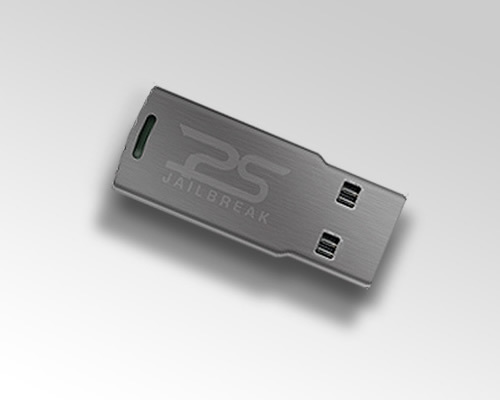
KaKaRoTo: "Well, I never planned/wanted to...but I was browsing some forum and I saw a usb dump of the PS Jailbreak dongle. My curiosity got the best of me and I wondered 'what does all that stuff mean?', so I researched the usb protocol specification and then I saw my N900 phone on my desk and thought 'I bet it would be easy to reproduce that with my phone', so I started tinkering. One thing led to another and PSFreedom was born. It got a lot of attention, more than I imagined (I was just expecting a "cool, the N900 is awesome" kind of response), Android porting started (by other developers) and eventually, I extracted the payload into PL3. I've always been pro-open source and open development, and seeing how the scene is or was, I thought I could help by trying to create a good foundation for future devs. I was thinking of how Dark Alex left the PSP scene and M33 was never heard of again (correct me if I'm wrong). and I thought if only the PSP scene was 100% open, then anyone could have picked it up where he left it."
For those who haven’t been following the PS3 or PSP hacking scene, the “PS Jailbreak” was the first real “hack” released for the PS3. It was a USB dongle that allowed the PS3 to run homebrew, as well as play back up games. However, the dongle came from an unknown source and people weren’t really sure how it worked or what it actually did to the PS3.
It wasn’t long before it was reverse engineered (if you can believe that a “hack” had to be “hacked") into two components - the exploit and the payload. The exploit was a clever way of taking advantage of how the PS3 handles multiple USB devices, which allowed you to overwrite certain parts of the PS3’s RAM. But what to overwrite? That’s where the payload comes into it. As it turns out, by adding more features to the payload, more and more interesting things could be done with the PS3. PSFreedom was an open source version of the exploit (originally for certain Nokia phones, but later ported to other devices) and PL3 was an open source version of the payload, all documented to easily allow other developers to tinker with the PS3. This is in contrast to the PSP scene, where not a lot was documented so when a developer “left” the scene, a lot of their work would remain unfinished with nobody able to continue it.
KaKaRoTo: "My goal is to make open source and open knowledge the de facto standard for the PS3 scene. I hated to see all those .PUP releases and BSDIFF stuff from people who modified the firmware on their own, so I decided to start PS3MFW where every modification to the firmware is open and visible to the user."
When the details of the PS3 encryption being broken first hit the Internet, quite a few people released their own "custom firmware", however many didn’t specify what exactly they had changed and more seriously, some even caused people to brick their console. PS3MFW is a tool that lets anyone easily create their own custom firmware from official PS3 update files. The included patches are optional and well documented, so people know exactly what they’re getting. This way people could enjoy the benefits of a custom firmware without worrying about what else had been done to it.
When Sony started filing lawsuits against other hackers, were you not concerned that you might be targeted yourself?
KaKaRoTo: "I was initially concerned, of course. I even thought of disappearing - as much as I love this, I don't want to be dragged into a lawsuit for the rest of my life just for the sake of a hobby, especially when I was named in the lawsuit against geohot. I kept a cool head, I was in contact with a lawyer that was provided to me by the EFF and I've read so many court documents that I've become almost an expert in law :p
First, I realized that Sony was abusing the law and wasn't trying to win anything but merely to scare everyone off, sending a clear message to developers that they will get sued if they don't comply, and that really irritated me. I felt oppressed and I felt my rights being violated by this giant corporation - so I refused to let them win.
Secondly, I made sure that I haven't done anything illegal - and I haven't! I never published anything that was copyrighted by them, even the very first modified firmware that I released was a simple script that took the original firmware as input (a predecessor to PS3MFW).
Also, I live in Canada and here it is perfectly legal. There is no such thing as the DMCA and modchips are legal in Canada (it's even a registered trademark)."
 Do you think Sony has succeeded in scaring off developers?
KaKaRoTo: "I don't know, I think it's two fold. First, many got scared by Sony, secondly, many were just there for their backup managers, once that was working they decided to say goodbye."
But you're obviously still around, so presumably you're not interested in piracy?
KaKaRoTo: "No, I'm not, I own almost 150 PS3 games. I don't need to pirate anything since everything that I like, I buy. I'm interested in knowledge, and the entertainment of hacking/coding.I don't even use my PS3 for linux or homebrew, I just have fun coding it.
I have 2 PS3s and one is not jailbroken. It's on the latest firmware and I use it for games and as a media hub. The other one is jailbroken and I only turn it on to test something."
One thing that comes across from talking to KaKaRoTo is how passionate he is about his ideals, that information should be freely distributed and that the more open things are, the better. He certainly doesn’t come across as the fame-and-fortune seeking type and you have to wonder “Why does he do this? What’s in it for him?”. 
What made you decide to create the “Humble Homebrew Collection”?
KaKaRoTo: "I found Pattern (my favorite puzzle game) on my PC. I've been playing it for years and I thought 'this would be a good/simple homebrew app'. I tweeted that and Clement Bouvet came out quickly with a proof of concept using Cairo. I thought 'awesome, someone actually listened to my request, maybe I'll help him', so I looked at the Cairo API and the SGT Puzzles' design and I loved them both, so I decided to write a full app around it.
I realized there's no toolkit for the homebrew apps on PS3, so I also started working on one (the menu system you see in the homebrew app) in hopes that it will help others build their own apps. Then I thought of the humble indie bundle and I wanted to do the same thing, but differently. Having a petition against Sony has always been something that I wanted to do, so this was the perfect opportunity."
 Have you ever done anything like the Humble Homebrew Collection before?
KaKaRoTo: "No, this is the first time, but I've seen many petitions before - like the OpenMedia petition against the CRTC's decision to impose usage based billing in Canada.
It worked, it made the government force the CRTC to revise its decision. But I've never created one myself and it probably shows that it's amateurish :p"
Are there any future plans for the Collection?
KaKaRoTo: "I'm not someone who plans ahead. Like I said earlier, I never planned to be in the PS3 scene in the first place. I also quite often said that I would never do homebrew because what I like is the low level stuff - writing libraries for others to use in their homebrew, for example. I didn't plan the humble homebrew collection, but it happened.
I planned on improving the puzzles, fixing some performance issues, making it better in many aspects (there's a 'TODO' file in the game's source directory) but since I've received some critiques about the games, (people don't like the idea of 'crappy little puzzles' as a "homebrew") I thought I'd move over to something else.
I'll probably still fix the various things I wanted to do for the SGT Puzzles, but for now, I'll do something a bit different.
My plan was to relax, and put the PS3 scene behind me for a little while and let others pick up where I left but I've once again had my curiosity get the best of me. Yesterday, I went to a little wikipedia page and randomly clicked on one of the games there.
It was Chromium B.S.U, a space shooter that seemed quite fun. I played it for a bit on my pc, I liked it and then I wondered how easy it would be to port to the PS3, so I started the process. It didn't go so well because Chromium B.S.U. depends on OpenGL and we don't have that yet.
I found Mesa3D and so there's a way to get it to work by using software rendering, but I don't really want to do it (it looks boring).
So I looked at other games, two of my favorites were Widelands (a clone of Settlers 2) and Free Heroes 2 (a clone of Heroes Of Might and Magic 2).
Widelands depends on some stuff like OpenGL, python and lua, so I didn't bother, but Free Heroes 2 only depends on SDL, which has already been ported for the PS3. So I tried to compile it and it worked!
I've been playing a bit of it right now on my PS3 while doing this interview. So I think that will be the next homebrew that I'll add to the collection, but people need to understand that it's not that easy to port a new game, so it might take a few more weeks before it's ready, depending on what I want to add to make it 'PS3-compatible' and how much free time I get."
True to his word, later on in the interview he linked to this video of the game running on a jailbroken PS3.
Sony seems very reluctant to allow Homebrew on the PS3 and have a history of stifling it in some of their other products, why do you think this is?
KaKaRoTo: "I think there are two types of people at Sony. First, the lowly developers who try to sneak in some features that we'll like (like OtherOS, I'm pretty sure it wasn't an exec's decision), and then you have those big guys in suits who probably never played a game in their life.
The guys making decisions are the guys who understand nothing about how the real world works and they only hear the excuses of those below them who say 'it's because of piracy' whenever they can.
It's simple, you release a good game and even if you can pirate it from day 1, it will sell like crazy and you'll get rich.
When you release a crappy game, even if there is zero piracy, you will not sell it and you'll lose money.
The thing is, if there is even a 0.000001% chance that someone pirated that crappy game, then those responsible for the game will blame it all on piracy.
They'll say 'if it wasn't for piracy, we would have made billions of dollars more' and the stupid CEOs believe that., so they say 'do ANYTHING and EVERYTHING (even if it's illegal) to stop this from ever happening again'.
The result - all their customers suffer from it, piracy stays the same and now they have a good excuse to continue shipping crappy games instead of improving their games.
So when a question like homebrew or linux or something similar comes on the desk of that stupid CEO who doesn't understand a thing about this, he asks 'euhh.. how much will that give us?', he gets the answer of 'customer trust, loyalty, happy users' and he says 'HOW MUCH!??' and they say 'nothing substantial on the short term' so he throws it on the garbage because he doesn't understand what it really means."
Some people have suggested that Sony wont allow Homebrew because they would loose money from it, or that there’s no way to monetise it. Do you think that’s true?
KaKaRoTo: "No, I don't think that's true. Look at Google, Apple and Microsoft, they are making a lot of money through homebrew.
People think 'homebrew' means piracy or 'crappy little apps', but they don't realize that most of the applications on the iPhone's App Store are homebrew.
You'll see a few apps who are made by a company (like Angry Birds by Rovio) but if you run the application and you don't see a company logo as a flash screen, then that's homebrew.
Why is the iphone selling so well? Because it has all this huge library of apps and games!
Has apple lost any money from it? No. Does apple get tons of money thanks to homebrew? Definitely!
If I remember correctly, Apple gets 30% off the sales of apps on the app store and that's a substantial amount of money considering how much cash people are spending there.
So, 'there's no way to monetise it'? That's just an excuse. Sony are extremely arrogant and that's probably the only reason.
If you sell your SDK for 100$, you'll get 1 million people to buy it, that's $100 million, Sell your SDK for 25 000$, and you'll get 100 people to buy it, that's $2.5million, do the math.
Actually, I don't know if Sony's SDK is 25K$ or 100K$, I heard both numbers... but whatever the price, some guy coding in his garage can't get it, EVEN if he had the money for it."
This is true, Sony wont sell just anyone an SDK, you have to be a registered developer and the cost of entry is very prohibitive. However, it should be noted that this is a fairly common thing, with both Microsoft and Nintendo doing a similar thing (although Microsoft does at least have XNA).
 Assuming Sony doesn’t budge on the whole issue, do you think Homebrew on the PS3 has a future?

KaKaRoTo: "I honestly don't know. I see the scene almost dying, we need more exposure, we need more developers, but first, we need a good SDK. We already have PSL1GHT, which is awesome, and the SDK has been ported, but we're still lacking proper OpenGL support. Once we get that and we get a hack for the latest firmware, so more people can get on board, then we'll probably see some more homebrew apps popping up. It takes time, it takes a huge amount of time to develop something, so that's probably why it's so slow.
I'll try to keep encouraging people to develop homebrew and hopefully it will become very active." 
A lot of PS3 owners have been upset at the recent PSN hack and many people blame the Homebrew community for it. What would you say to these people to alleviate their concerns about getting Homebrew on the console?

KaKaRoTo: "People are unfortunately confusing homebrew, developers, hackers and crackers.
It's like I said before, any app on the iPhone that doesn't show you a company logo whenever you start it IS homebrew.
So, if apple gets hacked tomorrow, are you going to blame it on the guy who wrote that fart app?"
 How did you feel when you first heard of Anonymous’ planned “attacks” against Sony?
KaKaRoTo: "Well, when I first heard of it, I didn't know who or what Anonymous was.
I later learned about them and their history, but I didn't agree with their methods.
I didn't participate in any of the attacks, and I disagree with the DDoS, but someone explained it to me like "we're like protesters sitting in front of a building's entrance, preventing people from entering" so I'm not sure exactly what to think of it.
One thing though that I can say: Sony deserves everything it's getting. The users, the gamers don't deserve that small downtime of PSN when Anonymous was attacking Sony but Sony themselves deserved it. Now, about the PSN Hack, which I'm introducing in this question, but which is (probably) unrelated to Anonymous...
Again, the users did not deserve getting their information stolen and they did not deserve being without PSN for 3 weeks, however Sony deserved it in the sense that:
1 - They lost customer trust - which is exactly what should have happened when they removed OtherOS.
2 - They lost money and got sued and got in a lot of news sites about this - which is exactly what should have happened when they removed OtherOS.
And while the gamers shouldn't have lost PSN access for this long, at least now they understand what it feels like to be 'without PSN access...because some giant a**hole decided to force it on you for their own enrichment' and just like the users didn't deserve what happened to them (or their personal information), we didn't deserve losing functionality we paid for either."
 It has been rumoured in the past that the PS3 would be getting Google TV integration. This would potentially bring the Android Market to the PS3 - do you think this would alleviate the desire for Homebrew?
KaKaRoTo: "Sony would probably not allow it, but even if it did, android runs on Java, which is inside a virtual machine. It would probably be a very limited/neutered version meaning you probably can do anything with that on the PS3. Maybe some small apps, but probably not a full game."
 What if Sony decided to bring “OtherOS” back? Would that make a difference?
KaKaRoTo: "I think it would, yes. It would first be a huge step towards the goal but when you think about it, it wouldn't be much more than 'hey, here's your PS3 the way it was when you bought it' so they'd actually not be doing anything.
But now that people have tried and enjoyed being able to run their homebrew directly from the XMB, I'm wondering whether or not they'll be happy with just that.
For me personally though, if we get OtherOS back, it will already be a big success."
 Anything else you’d like to add?
KaKaRoTo: "People often say Geohot, Fail0verflow, KaKaRoTo or Mathieulh to talk about those who 'did something for the PS3 scene', but I'd just like to say that you only know those names because we somehow end up being the 'face' of the scene, but in reality, there are many talented people who deserve a really big thank you and a huge applause for all their work.
For instance, I'm thinking about the contributors to PSL1GHT. Without them, we wouldn't be able to do any of that. Sometimes people forget that there are many building blocks and painting a wall is worthless if someone didn't take time to actually build that wall. So, I'd like everyone to remember, whenever they think of the scene, of all the people 'behind the scene' who also make this possible. The PS3toolchain, PSL1GHT, the PS3libraries port, the SDL port, etc..."
And with that, we parted ways. KaKaRoTo is a man that isn’t afraid to give his opinions on subjects and stand firmly behind him. He’s quite clearly a tinkerer of sorts and wants everyone else to be able to tinker with him, if they want to.
Whether you agree with him or not, KaKaRoTo certainly doesn’t fall into that "hackler" stereotype that has been spreading regarding the whole PS3/PSN hacking fiasco. He isn’t bragging about what has been done, he isn’t threatening Sony or anyone else until he gets his way and he certainly isn’t in it to make a buck or two. It would have been nice to have reached Sony themselves for comment on this whole issue, but sadly they only seem to be sending out this same response to everyone who asks about homebrew:
It doesn’t appear as though Sony is likely to ever change this stance, but it doesn’t seem that homebrewers like KaKaRoTo are giving up, either. If KaKaRoTo has convinced you that homebrew deserves a place on the PS3, feel free to head on over to http://humblehomebrew.com/ and sign the petition. If you disagree with him, then feel free to download and enjoy the free games anyway.

Apple releases Pages, Keynote and Numbers for iPhone and iPod touch

Apple on Tuesday expanded its iWork productivity software suite to the iPhone and iPod touch, bringing Pages, Keynote and Numbers from the iPad.
Pages, Numbers and Keynote (iTunes links) are now universal applications available for both the iPhone and iPod touch. For those who already purchased any of the iWork applications for the iPad, which are still available for $9.99 each, the software is available as a free update through the iOS App Store.
"Now you can use Keynote, Pages and Numbers on iPhone and iPod touch to create amazing presentations, documents and spreadsheets right in the palm of your hand," said Philip Schiller, Apple's senior vice president of Worldwide Product Marketing. "The incredible Retina display, revolutionary Multi-Touch interface and our powerful software make it easy to create, edit, organize and share all of your documents from iPhone 4 or iPod touch."
Created for the Mac and then completely redesigned for iOS, Keynote, Pages and Numbers allow users to create and share presentations, documents and spreadsheets on the go.

Keynote, Pages and Numbers import and export documents from iWork for Mac and Microsoft Office; print wirelessly using AirPrint; and include Apple-designed themes and templates. All iWork apps now include improved document management with thumbnail images that let users find files quickly, organize them and group them into folders using gestures. From the Tools button in the toolbar, users can share any presentation, document or spreadsheet without leaving the app.


iWork 1


Keynote comes with with animated charts and transitions. Users can play a presentation in Full Screen view on the high-resolution Retina display or connect to a projector or HDTV for a large audience. Available separately, the Keynote Remote app allows an iPhone or iPod touch to control a Keynote presentation on any iOS device or Mac.
Pages takes full advantage of the high-resolution Retina display on iPhone 4 and iPod touch so users can see all the detail of their documents. On the smaller screen of the iPhone and iPod touch, Smart Zoom automatically zooms in to follow the cursor when editing, and zooms back out when finished.

iWork 2


Numbers uses Multi-Touch gestures and an intelligent keyboard to help create spreadsheets with over 250 functions, tables and charts. Just like Pages, Numbers takes advantage of the high-resolution Retina display and Smart Zoom on the iPhone 4 and iPod touch.

iWork 3

Keynote, Pages and Numbers are universal apps that run on iPad and iPad 2, iPhone 3GS and iPhone 4, and iPod touch (3rd & 4th generation). Keynote, Pages and Numbers are available from the App Store for $9.99 (US) each for new users, or as a free update for existing iWork for iPad customers. Keynote Remote is sold separately via the App Store for 99 cents (US)

Intel's new 'Ultrabook' design to compete with Apple's iPad, MacBook Air

Intel has unveiled design guidelines for a new category of thin-and-light laptops, dubbed "Ultrabooks," that take cues from Apple's iPad and MacBook Air.
Intel executives detailed the new designs at the Computex trade show, Engadget reports. Ultrabooks will marry the performance and capabilities of a laptop with "tablet-like features" in a "thin, light and elegant design," Executive Vice President Sean Maloney said in a statement.
According to Maloney, Intel aims to reach a 40 percent share of the consumer laptop market with the "no-compromise" Ultrabook by the end of 2012. The new class of mobile PCs will sport form factors less than 20mm thick and cost less than $1,000.
The first Ultrabooks will utilize the current-generation Sandy Bridge architecture, but, beginning in the first half of 2012, Intel plans to transition Ultrabooks to the next-generation "Ivy Bridge" processors.
In 2013, the chipmaker hopes to introduce products codenamed "Haswell" as the "third step toward achieving the Ultrabook and reinventing the capabilities of the laptop in ultra thin and light, responsive and more secure designs." Intel claims the Haswell processors will reduce microprocessor power to "half of today's design point."
The first Ultrabook laptops will arrive in time for the 2011 holiday shopping season, Intel said. ASUS will be one of the initial launch partners of the Ultrabook specification with the UX21 Ultrabook.


ASUS UX21 Ultrabook

"At ASUS, we are very much aligned with Intel's vision of Ultrabook," said chairman Johnny Shih. "Our customers are demanding an uncompromised computing experience in a lightweight, highly portable design that responds to their needs quickly. Transforming the PC into an ultra thin, ultra responsive device will change the way people interact with their PC."
Pundits expressed skepticism at the new Ultrabook design, calling it a "makeover" of the struggling netbook category. They also noted that, several years ago, Intel attempted to introduce a thin-and-light specification called Ultra-Low Voltage, but the category failed to catch on. However, Intel says it has learned from its mistakes. "We really didn't get behind marketing [ULV]," said Thomas Kilroy, senior vice president and general manager of Intel's sales and marketing group. Ultrabooks will receive "a massive campaign by Intel in 2012," he said.
The new category closely resembles Apple's own vision for "the future of the MacBook:" the MacBook Air. CEO Steve Jobs said last year that the design team for the newly redesigned ultra-thin portable had drawn from popular features on the iPad, such as instant-on capability and battery standby time.
Intel also highlighted its accelerated roadmap for upcoming versions of the Atom processor, which is designed for tablets, netbooks and smartphones. According to the company's statement, "the Atom processor will outpace Moore's Law, accelerating from 32nm through 22nm to 14nm within 3 successive years."

MIT computational puzzle still unsolved after more than a decade

MIT computer scientist Ron Rivest, one of the co-creators, along with Len Adelman and Adi Shamir, of the RSA encryption algorithm, created a “timelock” puzzle that has gone unsolved since 1999.
The puzzle is based on finding the remainder when one large number, 7.2 quadrillion digits long, is divided by another, over-600-digit-long, number. The calculation was designed to take 35 years, using the fastest computer available each year.
There is a shortcut, however: if the 600-plus digit number can be factored into its two constituent prime numbers, the puzzle can be solved immediately. Factoring such a number is a difficult problem for today’s computers–a difficulty that underlies much of modern cryptography, including RSA.
Rivest said in New Scientist (subscription required) that computing speed has not increased as fast as he originally predicted, so the solution to the puzzle will likely take longer than 35 years to calculate, barring a breakthrough in factoring technique or the invention of a practical quantum computer. “Computing power isn’t increasing quite as fast as predicted, in terms of ability to do fast sequential computations,”

Nokia N8 Pink gets creepy dismembered doll treatment, even more pink

Earlier this month, we were rather unimpressed with Nokia's rebranding of the N8 Symbian smartphone, and it seems someone took note. Because the promo video for the N8 Pink is anything but unimaginative. In fact, it's downright frightening. The video features a series of contorted Barbies dolls, prancing about in Lady Gaga-esque undergarments, with accompaniment by British girl group Sugababes. This is one marketing campaign we won't soon forget. For a glimpse at the disturbingly enthralling cotton-candy romp, check out the video after the break.


HTC Sensation available on T-Mobile June 15th for $200, hits Walmart 'as early as June 12th'

The foremost question in the hive mind of Android power users these days is typically whether to go with HTC's 1.2GHz, dual-core, 4.3-inch Sensation or the similarly specced Galaxy S II from Samsung. Of course, neither of those is actually out in the US yet, so if patience is not your favorite virtue, T-Mobile just made that decision for you. The carrier has announced it'll start selling the HTC Sensation from June 12th at Walmart stores, after which it'll be "exclusively" available on June 15th from T-Mobile retail stores. Pricing is your typical $200 on a two-year contract after a $50 mail-in rebate. Samsung's superphone shouldn't be too far behind, but it does look like T-Mo subscribers will get a good few weeks to familiarize themselves with Sense 3.0 before having to hear any gloating about Super AMOLED Plus displays and 8.49mm slimness. PR after the break.

IBM shows off the old hardware in its basement

IBM IS CELEBRATING its 100th anniversary this year, and like any centenarian it has accumulated a cornucopia of bric-a-brac over the course of its life. At the company's Hursley offices near Winchester, however, this means bits of old mainframes and suchlike, and when The INQUIRER's sister web site V3.co.uk was there recently, it managed to snap a few choice bits of the historical kit on show.
IBM printing card punch
This is a card punch from 1949, used for preparing punched cards, the data storage medium of its day.
IBM Hollerith card punch
More card punch equipment bearing the Hollerith name. Herman Hollerith founded the Tabulating Machine Company, one of the three firms that merged to form IBM in 1911.
IBM clocking in timepiece
A timestamping machine for workers clocking in. Another ancient product from one IBM's precursor companies.
IBM punched card collator
IBM Type 77 punched card collator, dating from 1937. It could automatically sort and file two sets of punched cards, handling up to 240 per minute.
IBM Selectric typewriter

IBM Selectric typewriter from 1967. These models featured proportional spacing, and a golf-ball head to print instead of each key manually striking the paper. Some Selectric models could record text to tape, allowing for editing like a crude word processor.
IBM magnetic tape
A magnetic tape reel of the type used with the Selectric typewriters to record and edit text, pre-dating the word processor by many years.
IBM ferrite core store
Before RAM chips, computers used magnetic core storage for data memory. This unit dates from 1958.
IBM TROS module
A Transformer Read-Only Store (TROS) module, used by IBM to store microcode in some computer systems in the 1960s.
IBM card assembly using SSI chips
An early card assembly using plug-in modules built using integrated circuits (chips) instead of individual transistors.
IBM disk drive assembly
IBM 5444 disk storage device, developed at Hursley in 1969 for the System/3 computer. The removable cartridge on top contains a single 14in disk storing up to 2.5MB of data.
IBM disk drive 2
Another early disk drive, showing how little the basic design has changed in decades. The disk platters and read/write head assembly are clearly visible.
IBM 8in floppy disk
An 8in floppy disk, originally developed by IBM for loading microcode into System/370 mainframes at power-up. Later, floppies developed into a widespread general-purpose storage medium.
IBM 3279 colour terminal
Introduced in 1979, the IBM 3279 was the company's first colour mainframe terminal and could even display graphics.
IBM PC XT
The IBM PC was introduced in 1981, and is the direct ancestor of today's Windows PCs. This model is a PC XT with a hard disk (early models had only floppy drives or a cassette interface), but shows the original PC keyboard layout and the bulky monochrome display screen.
IBM Convertible PC
IBM's PC Convertible, from 1986, was the firm's first 'laptop' computer. It weighed over 5kg, and had a detachable screen allowing it to be used with a monitor on a desk. It was costly compared to rival machines from vendors such as Toshiba, and did not sell well.
IBM ThinkPad 701
The ThinkPad 701, an early ThinkPad laptop model from 1995, featured a unique 'butterfly' keyboard that unfolded and locked together as the lid was lifted, to give a full-size keyboard that is wider than the system case. Later laptops had larger and wider screens, doing away with the need for such a feature.
IBM z10 mainframe
Not an antique, but a modern z10 mainframe used at Hursley as part of IBM's software and services development, and safely behind glass to keep it away from the grubby hands of visitors.

Real-time 3D design tool, MachStudio Pro, now free

"Last week it was $4000, now it is free ;
What is MachStudio Pro?
MachStudio Pro is stand-alone, visualization and rendering software that lets 3D artists create and manipulate lights, materials, and HDR cameras in a real-time, non-linear workflow environment to achieve film quality results..."
Studio GPU - Download MachStudio Pro Free
"See how MachStudio Pro can help you explore and refine your creative options in real-time in full cinematic quality within a true non-linear 3D environment. This is a full featured version of MachStudio Pro and has absolutely no financial obligation or commitment.
How could this be? How can StudioGPU offer such a valuable piece of software at no cost? Let us briefly explain how we can do it. We firmly believe that MachStudio Pro is a revolutionary piece of software that will completely transform the way that you work in 3D by saving you both time and money. Based on our confidence in this notion, we think we can create a viable business model from generating revenue from Support, Training and Consulting Services. Please help us change the 3D production world for the better. Take a spin on MachStudio Pro today. You won't be sorry.
MachStudio Pro system requirements
Operating System:
  • Microsoft Windows 7 - 32 bit or 64 bit
  • Microsoft Windows Vista Business - 32 bit or 64 bit (SP1 or higher)
Hardware Minimum Requirements:
  • Intel Pentium 4 or higher, AMD Athlon 64, or AMD Opteron processor
  • 2 GB RAM
  • 2 GB of available disk space
  • 1 GB DirectX 11 compliant video card (tested w/ ATI and NVIDIA)
Studio GPU - MachStudio
"Realtime 3D graphics on your desktop
MachStudio Pro revolutionizes the 3D visualization production pipeline by placing the power of real-time graphics processing at your fingertips. Leveraging the horsepower of off-the-shelf professional graphics processing units (GPUs) and an innovative real-time rendering engine, it delivers a dynamic, feature-rich, non-linear work-space for creating superior CG images while optimizing resources and providing significant time and cost savings.
The Ultimate CG Sandbox
Designed by artists for artists and shaped by the actual demands of production, MachStudio Pro redefines the 3D workflow by eliminating the need for render farms and putting creativity and flexibility back into the hands of the people who need it. Digital artists can develop their work exactly as it will appear in the final render including complex lighting, caustics, cameras, shaders, materials, ambient occlusion, and color grading. Render times that usually take hours or days are reduced to minutes and even seconds, limiting artists only to the scope of their creativity.
The Benefits of MachStudio Pro
  • Real-time rendering on your desktop — say good-bye to expensive render farms.
  • Groundbreaking levels of interactivity giving the power back to the artist instead of the pipeline.
  • Provides revolutionary workflow allowing manipulation of cameras, lighting, ambient occlusion, animation, and materials in real-time.
  • Seamless interoperability with most leading CG software programs including Autodesk Maya and 3ds Max .
  • Resolution independent, allowing renders at any resolution and format (e.g. 1080P, 720P, 16:9, 4:3, NTSC, PAL and even 2K and beyond).
  • Render as final frame, or as passes for additional compositing work.
  • Generate higher quality CGI results for less time and money.